
The Retention Phase: Why Is Your Smile a Dynamic Balance?
Many patients eagerly await the day their multi-band braces are removed. However, the end of active treatment does not mark the end of your orthodontic journey. To ensure the stability of your new smile, the retention phase is essential.
Why do teeth shift after treatment?
Teeth are not anchored in the bone like they are in cement; they are part of a complex and dynamic masticatory system. Several natural forces are constantly acting on your teeth:
Muscles: The tongue, lips, and cheeks exert daily pressure that affects the position of the teeth.
Bone remodeling: A process of residual growth or change in the alveolar bone occurs throughout life.
The periodontal ligament: This "cushion" between the root and the bone has elastic memory that tends to pull the teeth back to their original position.
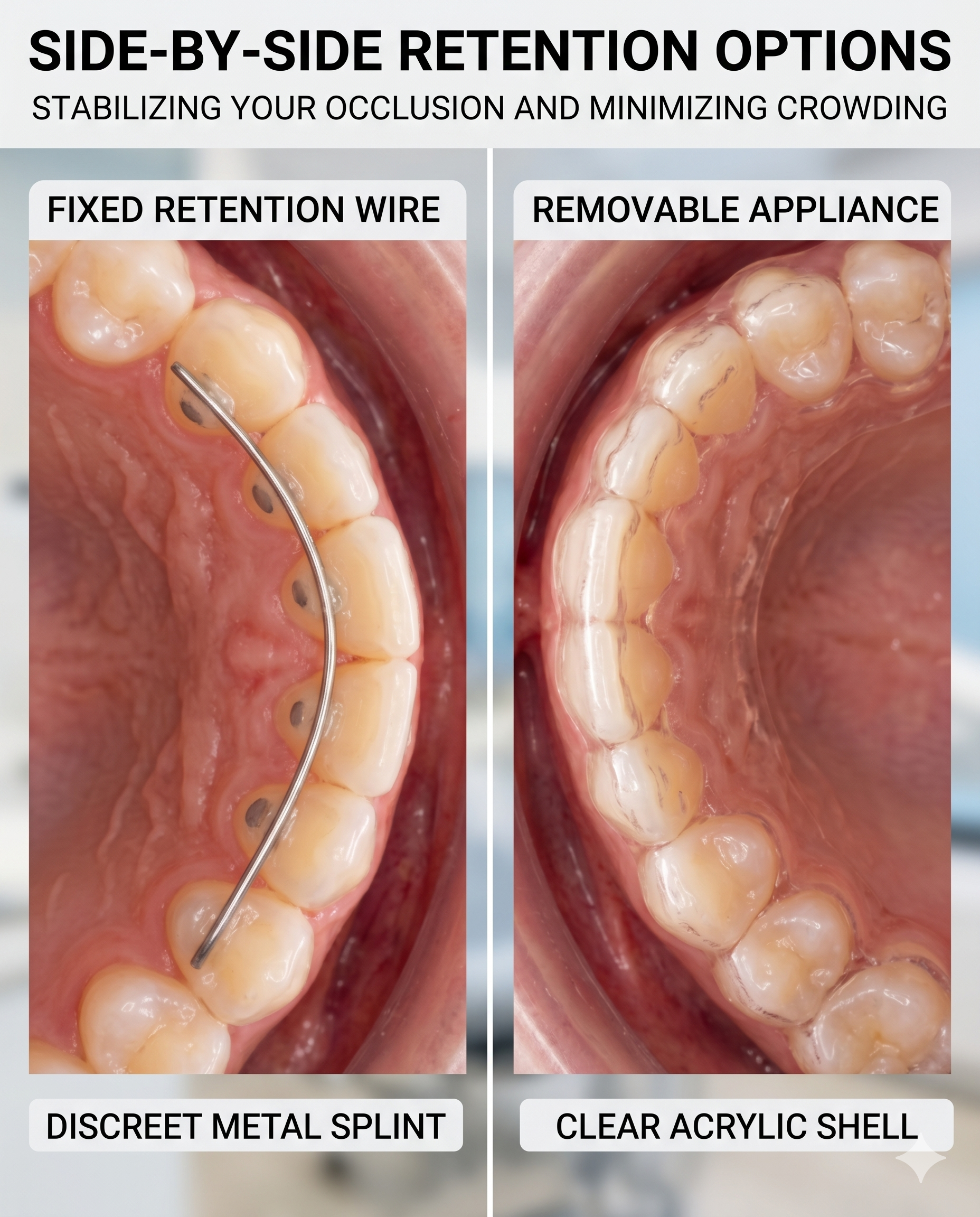
Types of Retainers
Dr. Altalibi will choose the option best suited to your dental health (teeth, gums, and joints):
Fixed retainer: A discreet metal retainer bonded to the back of the front teeth to minimize secondary tooth movement.
Removable appliance: A clear shell or an acrylic appliance to be worn as directed to stabilizethe bite.
A shared responsibility
The long-term success of orthodontic treatment depends on a mutual understanding between the orthodontist and the patient. While the orthodontist is committed to achieving an optimal and functional result, the patient is responsible for maintaining their retainers. A broken wire or forgetting to wear a removable retainer can allow natural forces to disrupt the balance achieved, sometimes leading to relapse.
Did you know?
Contrary to popular belief, wisdom teeth have little or no effect on the alignment of the front teeth in adulthood. The shifts observed over time are instead the result of the normal aging of the masticatory system.